One Codebase, Many Brands: When White-Label SaaS Pays Off

White-label SaaS lets one product serve many businesses under their own brands. Done well, every new client is mostly configuration. Done badly, every new client is a fork. Here is how to build the first kind, and when not to build it at all.
One product, many brands
White-label SaaS means you build a product once and let other businesses run it under their own name, logo, domain and pricing. Their customers never see your brand. Multi-tenant architecture is what makes that affordable: one codebase and one platform serving many clients, each kept separate from the others.
The appeal is obvious. Each new client adds recurring revenue without a new build. The risk is less obvious. Every client wants something slightly different, and if the architecture can't absorb those differences as configuration, you end up maintaining many products with one team.
In 26+ years of building platforms, I've seen white-label work brilliantly and fail expensively. The difference is almost always decided in the first few architecture decisions.
White-label vs custom builds: the business case
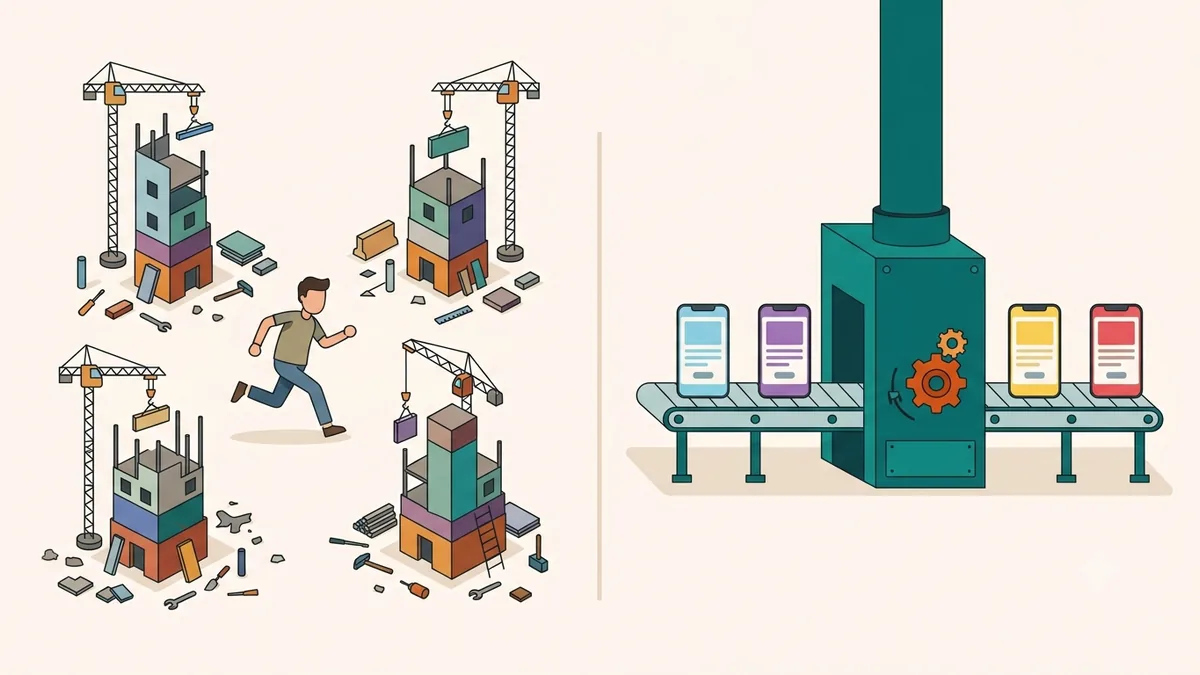
| Custom build per client | White-label SaaS | |
|---|---|---|
| Time to launch a new client | Months of development | Days to weeks of setup and branding |
| Client's upfront cost | High: they fund the build | Low: subscription or per-transaction pricing |
| Your revenue | One-off project fees | Recurring, and it grows with each tenant |
| Bug fixes and new features | Repeated in every codebase | Built once, live for every tenant |
| Room for client-specific features | Unlimited | Limited to what configuration allows |
White-label wins when many clients need roughly the same product. It loses when every client needs something fundamentally different.
Choosing a multi-tenancy model
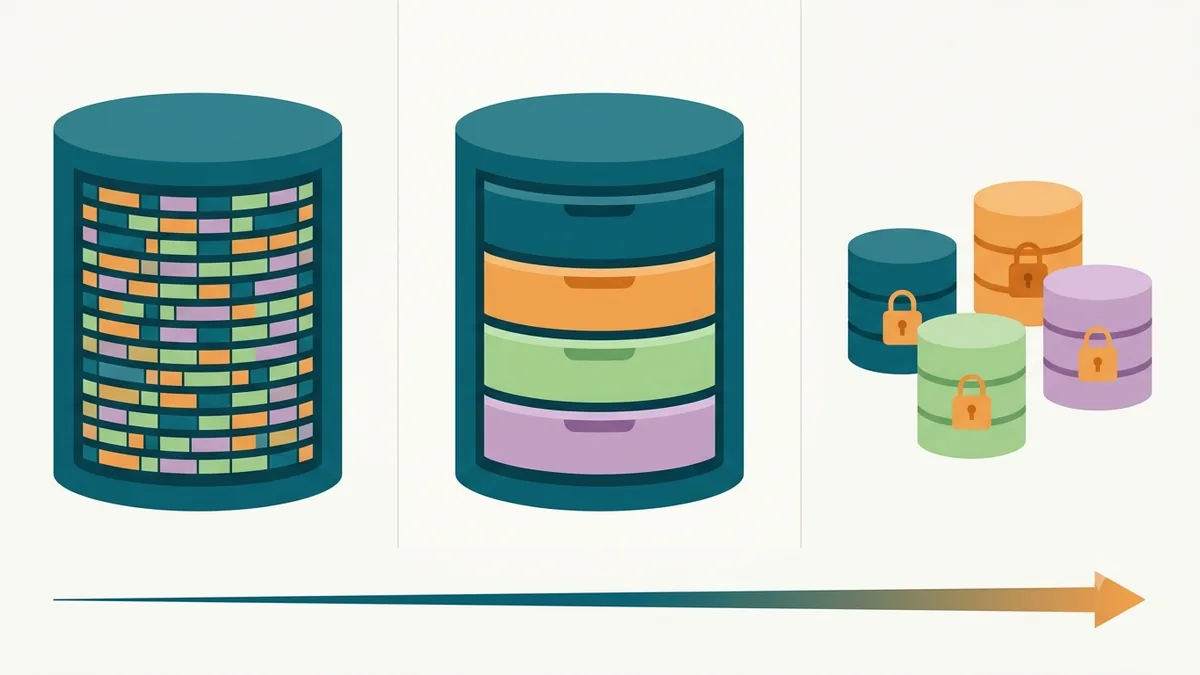
The biggest early decision is how tenant data is separated. There are three common models, and you can mix them.
| Model | How it works | Strengths | Watch out for |
|---|---|---|---|
| Shared database | All tenants in the same tables, separated by a tenant ID on every row | Cheapest to run; easiest to update; scales to thousands of small tenants | One missed filter leaks data; one heavy tenant slows everyone |
| Schema per tenant | One database, a separate schema for each tenant | Stronger separation; easier per-tenant backup and restore | Migrations run once per tenant; gets heavy past a few hundred tenants |
| Database per tenant | Each tenant gets its own database | Strongest isolation; per-tenant data residency; easy to move a tenant | Highest cost and operational effort |
A practical pattern is a hybrid: small tenants share a database, while large or regulated clients get their own. Design your data access so a tenant can move between models without code changes.
Feature gating by plan
Most white-label products sell tiers, such as Starter, Growth and Enterprise. The mistake is writing "if this client, then that feature" in the code. Six months later, nobody knows which client gets what.
- Define entitlements, not client names. Each plan lists the features and limits it includes.
- Check entitlements in one place, on the backend, and hide the matching UI on the frontend.
- Store usage limits, such as users, locations or monthly orders, alongside the features they cap.
- Allow per-tenant overrides for enterprise deals, but as data, never as code branches.
- Make upgrades instant. A plan change should unlock features without a deployment.
Per-tenant branding without forking the code
Clients pay for white-label because it looks like theirs. Everything they see should come from tenant configuration.
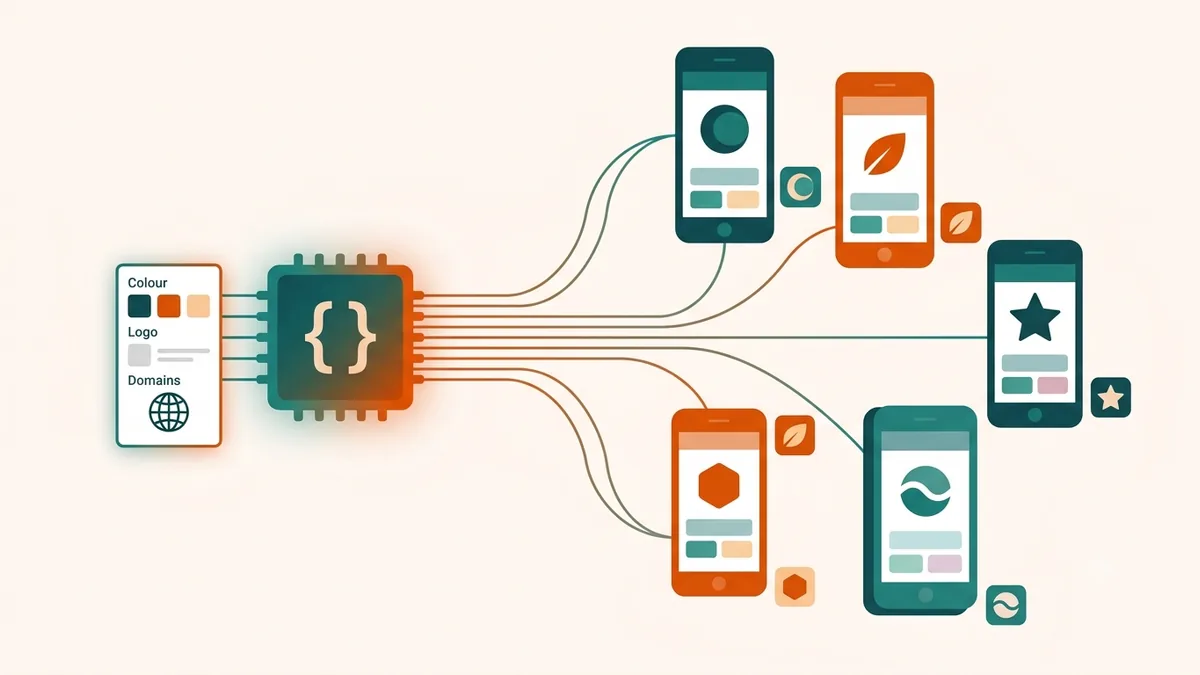
- Design tokens for colours, fonts and corner styles, loaded per tenant at runtime.
- Logo, app name, favicon and the PWA manifest, so an installed app shows the client's name and icon.
- Custom domains with automatic SSL certificates.
- Email templates, SMS sender names and push notification titles in the client's brand.
- Language, currency and time zone defaults per tenant.
- Legal pages, support contacts and payment accounts owned by the client.
If a branding request can't be met with configuration, treat it as a product feature for everyone, or decline it.
The traps that make white-label expensive
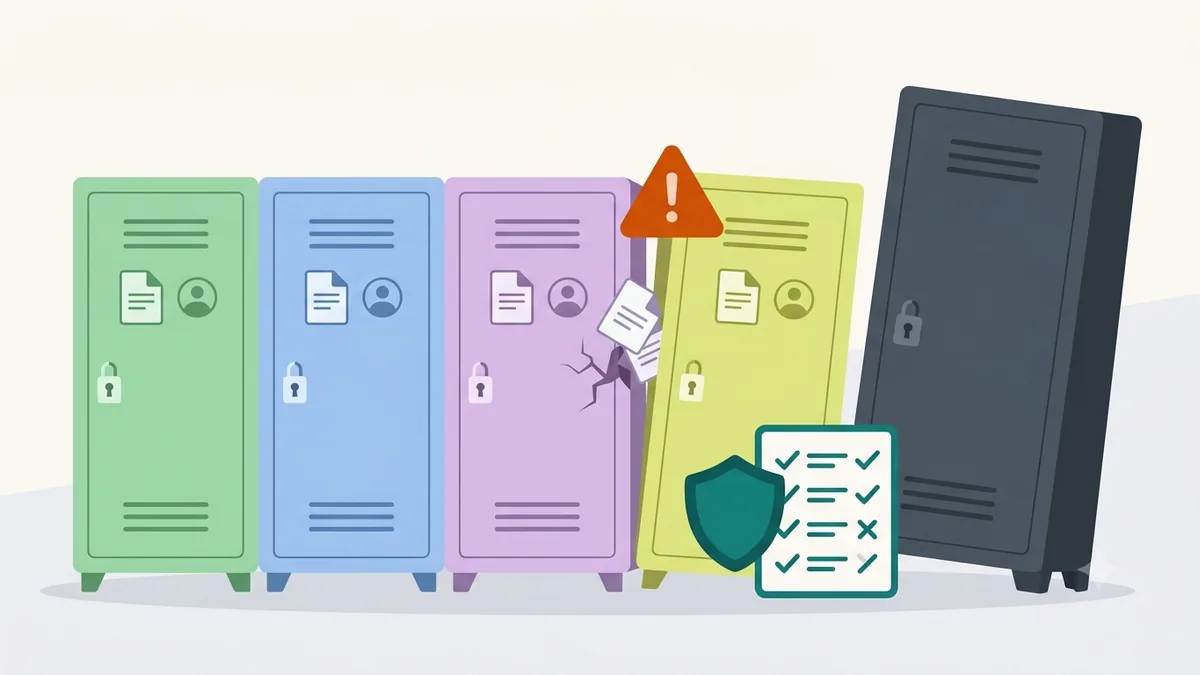
- Tenant data leaks. The most serious risk in multi-tenant SaaS. Enforce tenant context in the data layer, with database row-level security where available, and write automated tests that try to read another tenant's data.
- Customisation creep. One "small" custom feature becomes a fork. Every fork doubles testing and slows every release.
- Noisy neighbours. One busy tenant can slow everyone. Use per-tenant rate limits and move heavy tenants to dedicated resources.
- Migrations at scale. A schema change must work for every tenant, including the one with ten times the data.
- Support confusion. Logs, errors and support tickets must always show which tenant they belong to.
In practice: three white-label platforms
I've architected white-label and multi-tenant platforms in very different industries. The same principles held in each.
| Platform | What varies by tenant | Key design choice |
|---|---|---|
| EV charging management SaaS | Operator branding, apps, pricing and charger fleets | Multi-tenant Nest.js microservices with vendor-neutral OCPP support, so any operator can onboard any charger brand |
| Food delivery SaaS for restaurants | Restaurant brand, menu, delivery partners and plan | Plan-based feature gating across Starter, Growth and Enterprise tiers, with pay-per-order pricing |
| School management ERP | School branding, modules and user roles | One PWA serving unlimited schools, with 15+ roles and feature toggles per school |
In each case, onboarding a new client became mostly configuration: brand, plan, modules and payment accounts. That is what turns white-label into a business, not just an architecture.
White-label across Europe, the Middle East, Africa and India
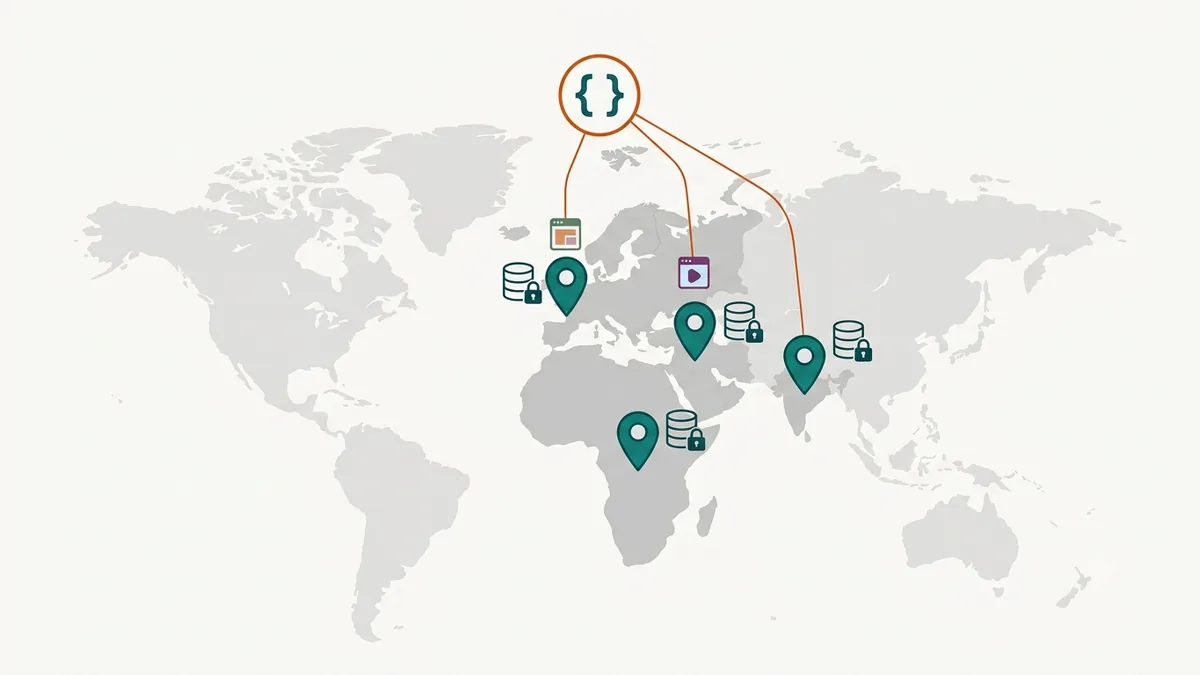
When your tenants sit in different countries, tenancy design becomes a compliance decision too.
| Region | What tenants will ask about | Design implication |
|---|---|---|
| Europe | GDPR, data processing agreements, EU hosting | Offer an EU-hosted deployment and per-tenant data export and deletion |
| Middle East | UAE and Saudi PDPL, data residency, Arabic | Support in-region hosting for regulated tenants; right-to-left layouts in the theme system |
| Africa | POPIA (South Africa), NDPA (Nigeria), local payments | Per-tenant payment providers, such as Paystack, Flutterwave or PayFast |
| India | DPDP Act, UPI, regional languages | Per-tenant language packs and Indian payment gateways |
This is where a hybrid tenancy model earns its keep: most tenants share infrastructure, while the ones with residency rules get a database in their own region.
When not to go white-label
- You have fewer than a handful of likely clients. Build for one, learn, then generalise.
- Every client's workflow is genuinely different. That's a services business, not SaaS.
- Clients insist on owning and changing the source code.
- You can't yet say no to custom requests. Without that discipline, white-label becomes many products.
White-label SaaS checklist
- A tenancy model chosen for your strictest likely client, with a path to move tenants between models.
- Tenant ID enforced in the data layer, not just in application code.
- Automated tests for cross-tenant data access.
- Plan entitlements stored as data, checked on the backend.
- Branding, domains, emails and the PWA manifest driven by tenant configuration.
- Per-tenant rate limits and monitoring.
- Migrations tested against your largest tenant.
- Data residency options for regulated markets.
- A written policy for custom requests.
Planning a white-label or multi-tenant product?
In a SaaS architecture review, we'll choose the right tenancy model, design plan-based feature gating and per-tenant branding, and check data isolation and residency for every market you sell in.
About Vikram Malihan
Fractional CTO with 26+ years of experience building and scaling technology teams across multiple continents. Specializing in helping startups and scale-ups navigate technical challenges, from architecture decisions to team building and fundraising support.
Learn more about Vikram