Trust Is a Feature: Designing Escrow-First Marketplaces
Marketplaces rarely fail for lack of features. They fail because strangers won't pay strangers. Here is how to design escrow, tiered verification and disputes into your platform from the first sprint.
Trust is the real product
Most marketplaces don't fail for lack of features. They fail because strangers won't pay strangers. An escrow-first design fixes that by making trust part of the product, not a promise on the homepage.
Every two-sided marketplace faces the same standoff:
- Buyers fear paying for work that never arrives, or arrives late and poor.
- Sellers fear doing the work and never getting paid.
- Both fear being taken off-platform, where the marketplace can no longer protect them, and where you lose your commission.
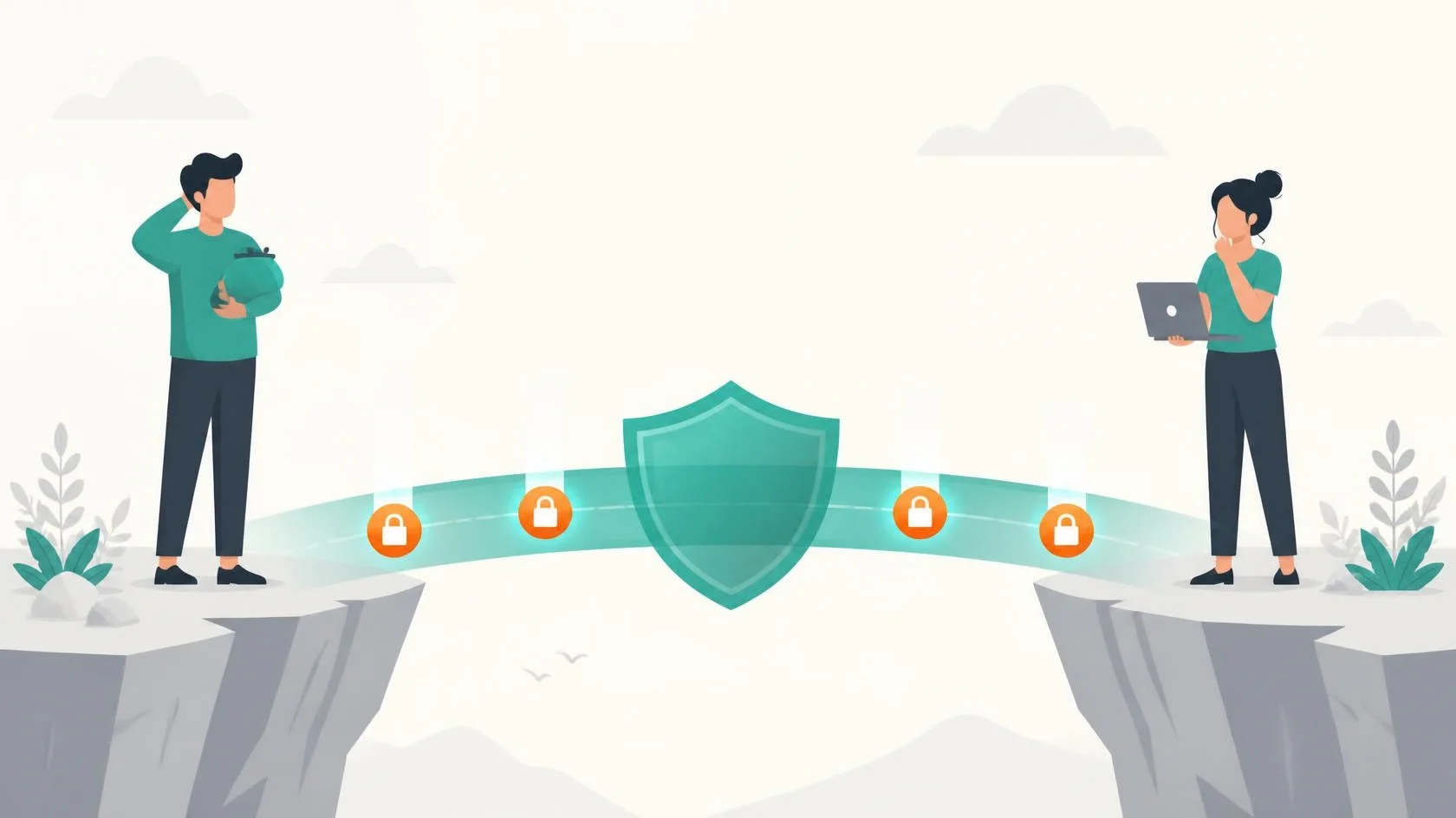
Ratings and reviews help, but only after trust has formed. On day one, with no reviews yet, money held safely by a neutral party is what gets the first transaction done.
In 26+ years of building platforms, I've learned to design for this from the first sprint. Bolting escrow on later means rewriting payments, payouts and disputes at the worst possible time.
How escrow-first works
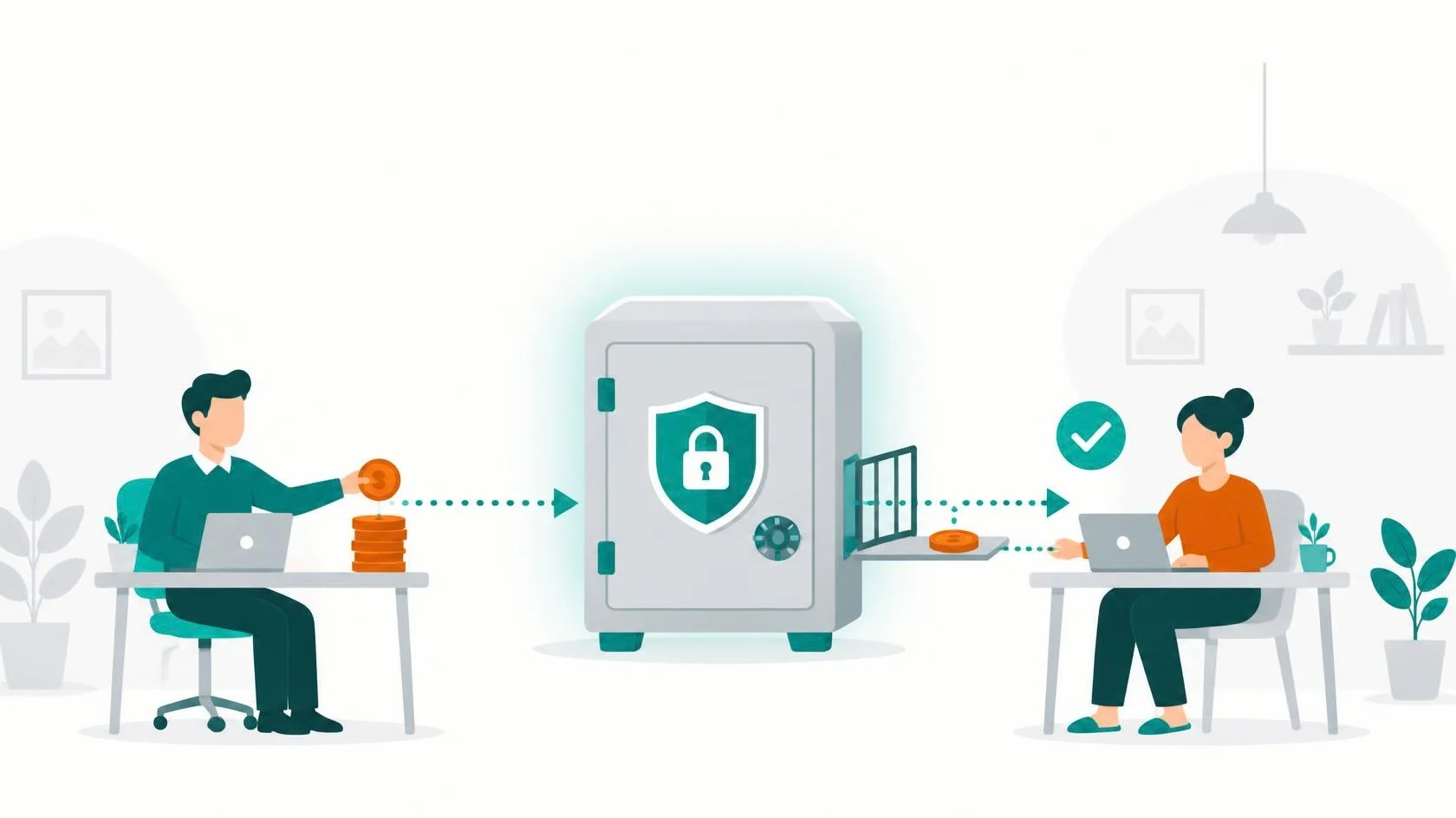
Escrow puts a neutral holder between buyer and seller. The buyer pays first, the seller sees the money is secured, and it only moves when the work is accepted.
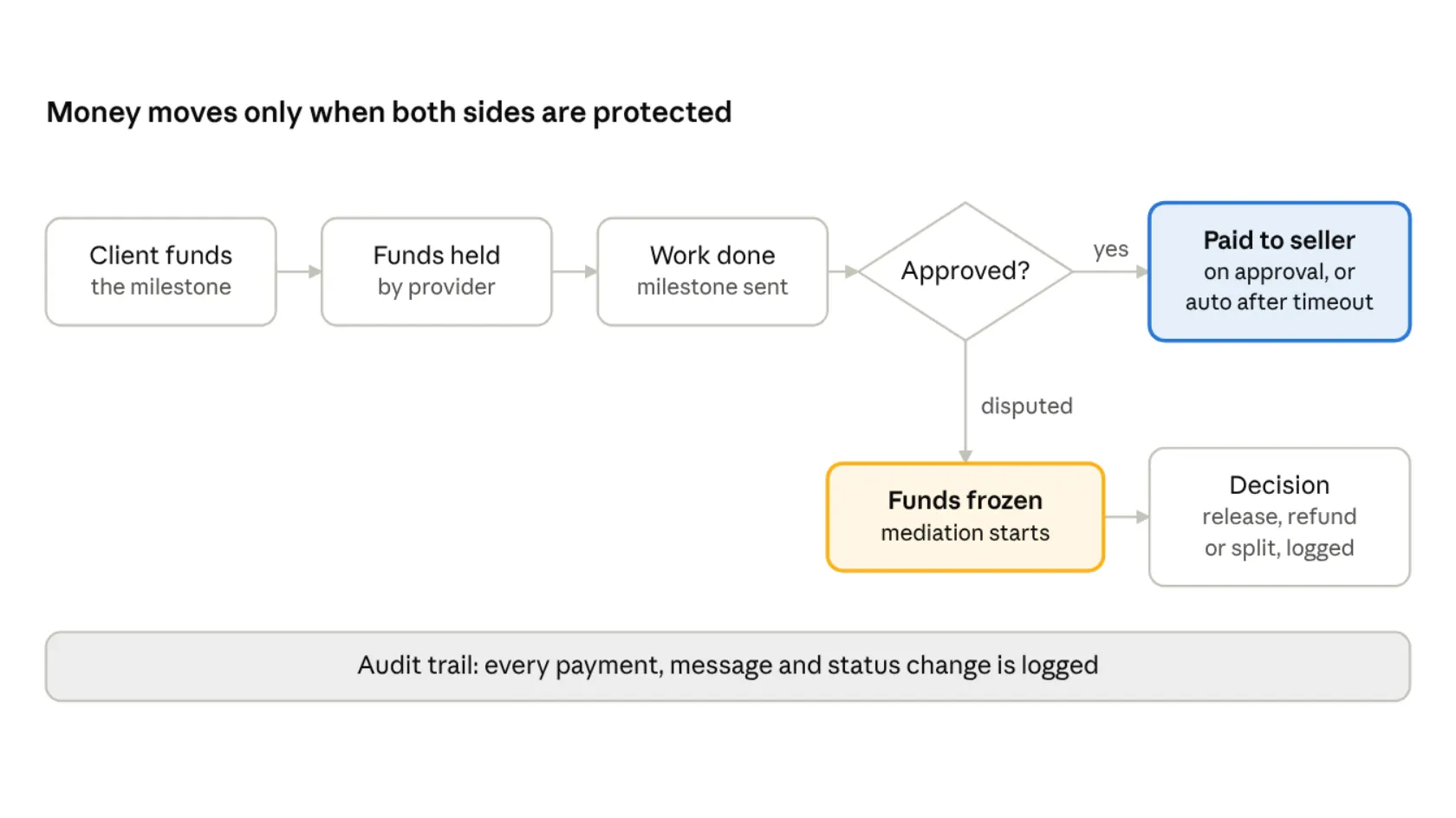
Two details make or break the flow. First, an auto-release after a fixed review window, so a silent client can't hold a seller's money forever. Second, a dispute path that freezes funds the moment it opens, so neither side can grab the money mid-argument.
Verify people in tiers, not all at once
Ask for too much on sign-up and people leave. Ask for too little and fraud gets in. Tiered verification asks for more only as the stakes rise.
| Tier | Unlocks | Checks |
|---|---|---|
| 1. Basic | Browse, build a profile | Email or phone OTP |
| 2. Transact | Apply for jobs, post jobs, accept payment | Government ID, selfie match, age check where the industry requires it |
| 3. Business | Company accounts, larger contracts | Company registration, authorised signatory, business bank account |
| 4. Payout | Withdraw funds | Bank or mobile-money account in the user's own name, as your payment provider requires |

Keep the higher tiers out of the sign-up path. Users should reach value first and verify when they have a reason to.
Plan for disputes before the first one
Disputes will happen. What decides whether users stay is how fairly and quickly you resolve them.
- Freeze the funds. Once a dispute opens, nothing releases until it closes.
- Collect evidence in one place. Messages, files, milestone history and delivery timestamps, all from inside the platform.
- Mediate with clear rules. A published policy says what counts as delivered, late or out of scope.
- Decide the outcome. Full release, full refund or a split, recorded with the reason.
- Escalate when needed. High-value or repeated disputes go to formal arbitration or legal review.
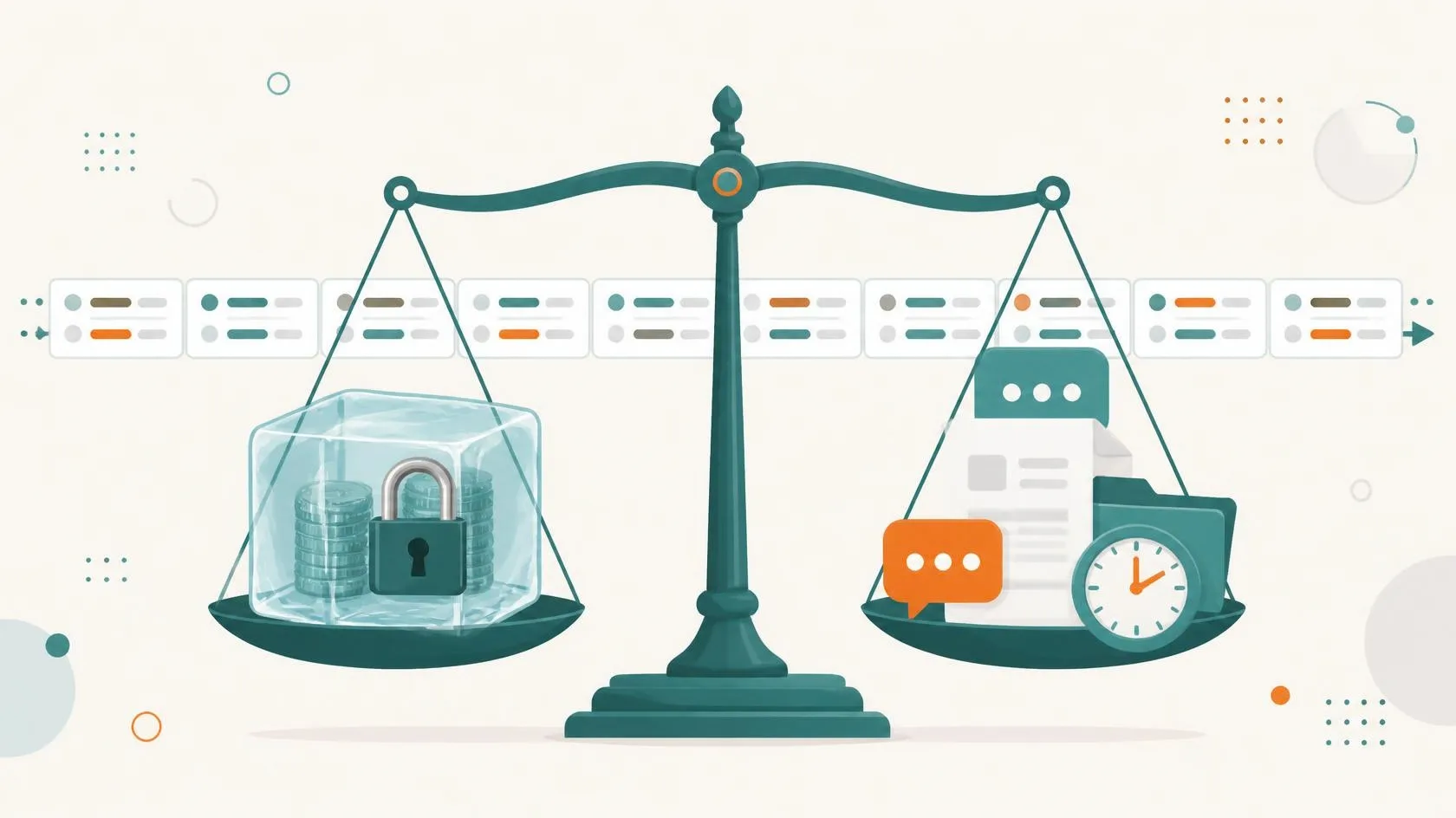
None of this works without an audit trail. Log every payment, milestone change, file delivery and message, with who did it and when. The same log protects you with regulators, payment providers and in court.
One more design rule: keep communication inside the platform. Built-in chat, file sharing and contracts aren't just features. They are the evidence your dispute process depends on.
Escrow across Europe, the Middle East, Africa and India
The escrow logic is the same everywhere. The money rails and the rules change by region.
One point matters before any gateway choice. In most countries, holding other people's money yourself needs a financial licence. Most startups don't hold funds directly. They use their payment provider's marketplace product, which holds funds and splits payouts on the platform's behalf.
| Region | Marketplace payment options to evaluate | Data-protection law |
|---|---|---|
| Europe | Stripe Connect, Adyen for Platforms, Mangopay; SEPA bank transfers | GDPR |
| Middle East | Checkout.com, Tap Payments, Stripe (UAE) | UAE PDPL, Saudi PDPL (including data-residency rules) |
| Africa | Paystack, Flutterwave, PayFast (South Africa); mobile money such as M-Pesa | POPIA (South Africa), NDPA (Nigeria) |
| India | Razorpay Route, Cashfree, UPI | DPDP Act |
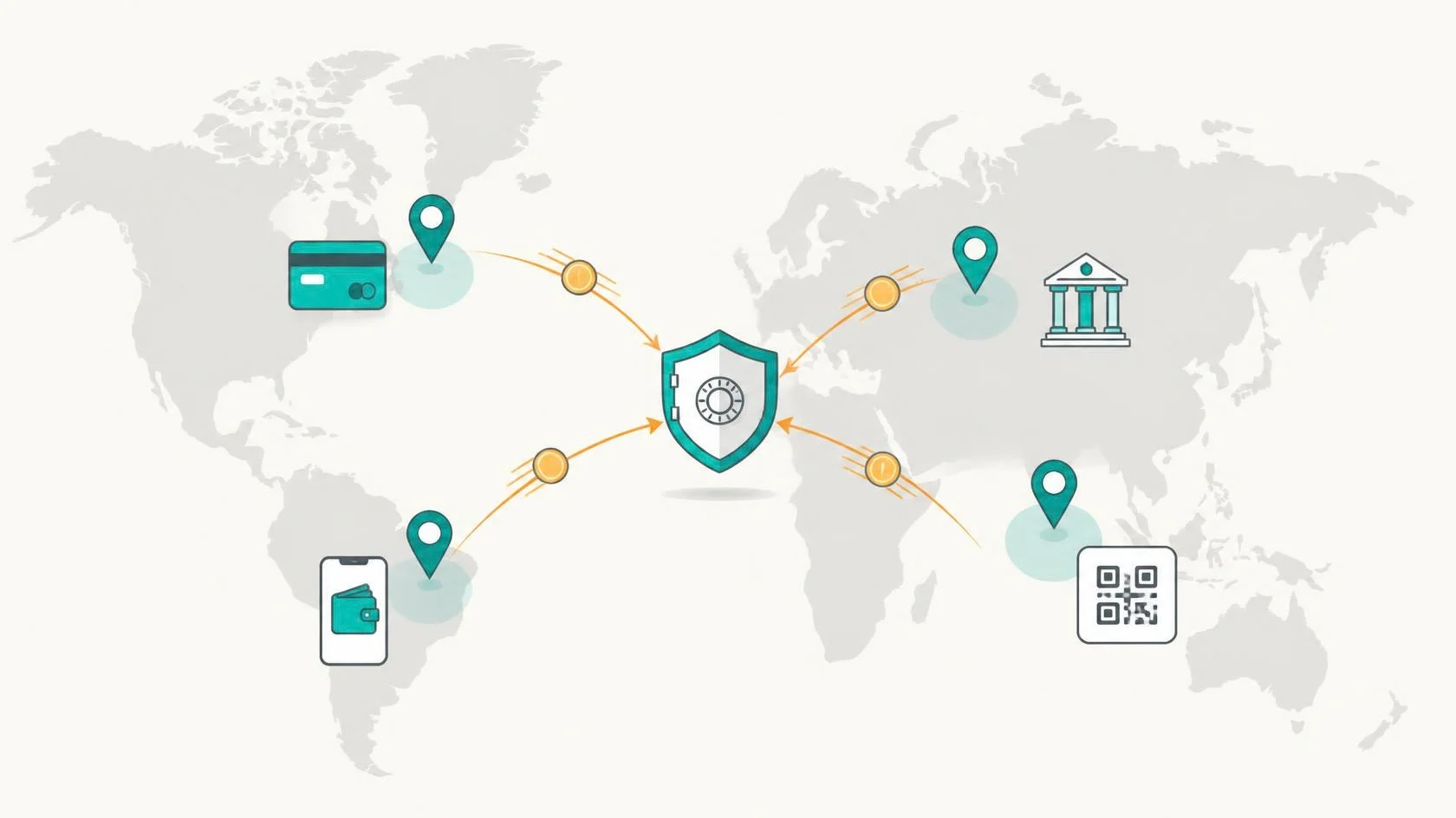
Check three things with any provider: whether it supports split or delayed payouts in your country, how long it can hold funds, and which payout methods sellers can use. Also price in currency: a marketplace earning in USD and paying out in ZAR, NGN or INR carries FX costs on every transaction.
In practice: RI Experts, an iGaming talent marketplace
As fractional CTO for Research iGaming, I architected RI Experts, a South African marketplace that connects iGaming companies with specialist freelancers worldwide. iGaming is a high-trust, regulated industry, so trust had to be built into the platform from the start.
Key design decisions:
- Mandatory escrow on every job. Clients fund before work starts. No funded escrow, no project.
- Milestone payments. Larger projects release money stage by stage, not in one lump sum.
- KYC and an 18+ age check before anyone transacts, as the industry requires.
- Dispute workflow with mediation and a path to legal escalation.
- Digital NDAs and contracts signed inside the platform, with IP transfer documented.
- GDPR and POPIA compliance tooling in the admin panel, plus a full audit trail of transactions.
- Payments through PayStack and Stripe, with South African rand as the default and multi-currency planned.
The result: a freelancer in Europe and a casino operator in Africa can work together without either side taking the payment risk.
Escrow-first marketplace checklist
- Escrow (or delayed payout) is required for every transaction, not optional.
- Your payment provider's marketplace product holds the funds, or you have the licence to.
- Milestones are defined before funding, with clear acceptance criteria.
- Auto-release after a set review window, so sellers aren't held hostage.
- Verification is tiered, with KYC before money moves.
- A written dispute policy, and funds freeze the moment a dispute opens.
- Chat, files and contracts stay on-platform, as dispute evidence.
- Every payment and status change is logged in an audit trail.
- Data handling meets GDPR, PDPL, POPIA/NDPA or DPDP for each market you serve.
Building a marketplace?
We'll map your escrow flow, assess payment rails for your markets and flag compliance requirements before they become expensive to change.
About Vikram Malihan
Fractional CTO with 26+ years of experience building and scaling technology teams across multiple continents. Specializing in helping startups and scale-ups navigate technical challenges, from architecture decisions to team building and fundraising support.
Learn more about Vikram